Live here for long enough and you’ll soon learn Melbourne’s reputation for four seasons in one day isn’t just a line locals trot out for visitors. Between November and March, big drops in temperature can arrive in minutes. In 2025 alone, the city peaked at almost 40 degrees in summer and dropped to less than 2 degrees overnight in winter.
That’s a wide brief for a patio roof. It has to handle radiant heat in February, hold warmth in July, deal with rain that turns up in every month of the year, and take a hailstorm without complaint.
Here’s how the main roofing materials actually perform against it, and where each one falls short.
The Short Answer
For most Melbourne homes, insulated roofing panels are the best all-round choice, because they’re the only option that addresses both ends of the temperature range and cuts rain noise at the same time.
Colorbond steel is the value option and performs well in wind and hail, while polycarbonate is best used in sections rather than across a whole roof. Louvre systems offer the most flexibility and sit at the top of the range.
The right answer depends on which direction your patio faces and how you plan to use it, which is worth settling before you compare materials.
What Melbourne’s Weather Actually Asks of a Roof
Most roofing comparisons list materials and their properties. It’s more useful to start with what the weather does, because that’s what tells you which properties matter.
Heat comes down, not just in. On a 35°C day, a single layer of steel absorbs heat and re-radiates it into the space below. You can be fully shaded and still uncomfortable.
Cold goes up. Melbourne’s real outdoor-living gap is April through September, and the reason those months get written off is that warmth escapes straight through an uninsulated roof.
Rain is a year-round problem, not a seasonal one. Here in Melbourne, a sunny day can turn into rain pretty fast. You can’t even trust it to stay seasonal. Winter isn’t when your patio gets wettest, just when it gets wet most often.
Hail is a winter and spring event. We see hail more often during winter and spring, which is worth knowing if you’re weighing up a material’s impact resistance.
Wind loading is a design question, not a material one. Exposed sites, bayside suburbs and open growth-corridor blocks carry engineering requirements that affect how the structure is built and fixed, whatever goes on top.
Insulated Roofing Panels
Best Patio Roofing Materials for Melbourne's Unpredictable Weather 5
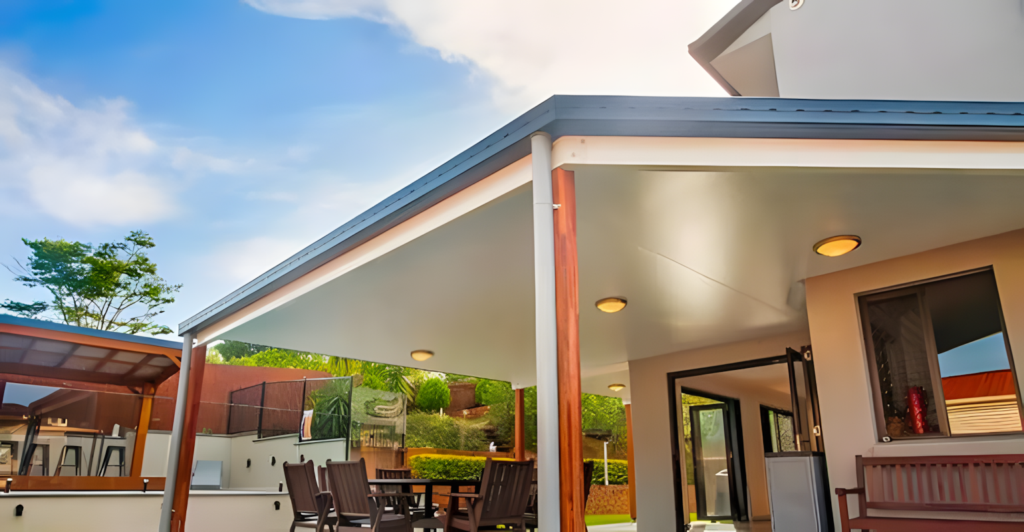
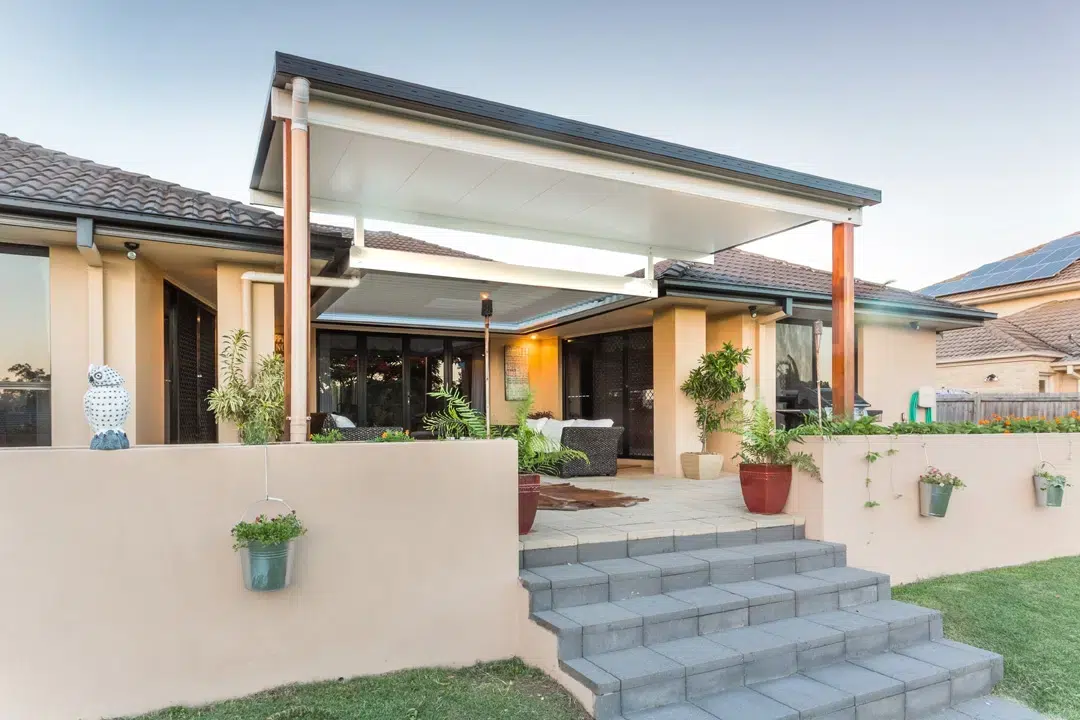
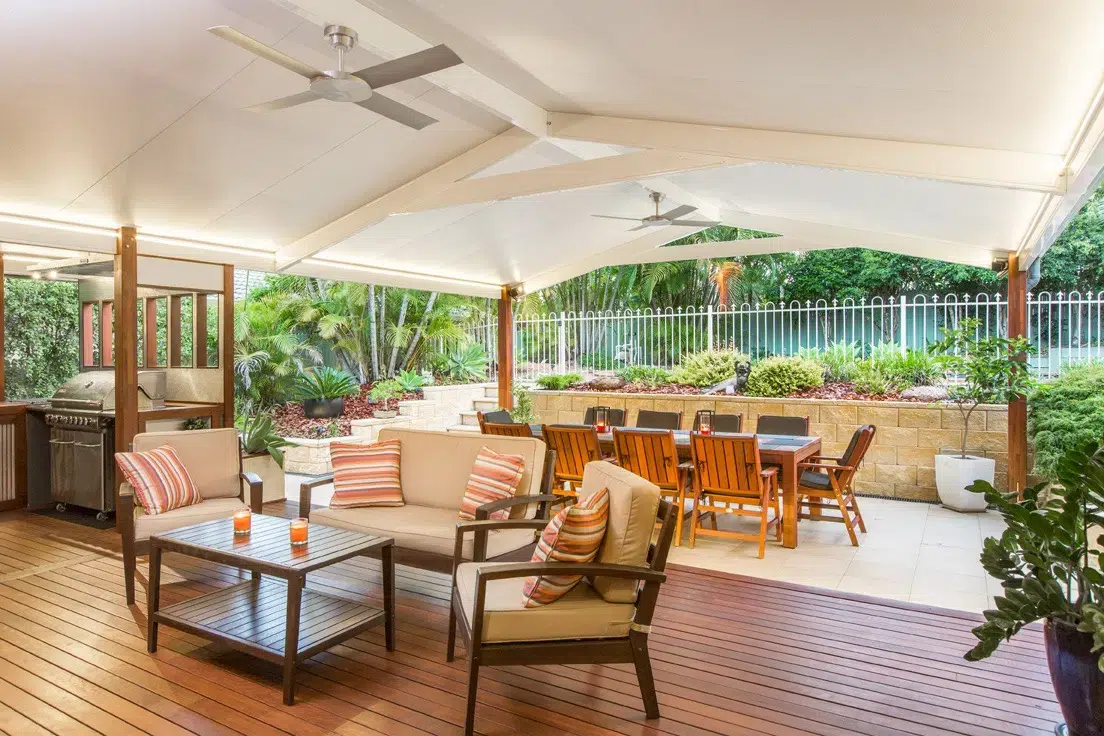
An insulated panel is three layers bonded together: a roof sheet on top, an insulating core, and a pre-finished ceiling sheet underneath. It’s roof, insulation and ceiling in one.
Where it wins in Melbourne
It’s the only common material that works at both ends of the temperature range. It interrupts radiant heat in summer and holds warmth through the cold months, which is what turns a patio from a three-month space into a year-round one. It also dampens rain and hail noise significantly, which makes a big difference when you’re trying to have a conversation in a rain shower. Because the panel is stiffer than a single sheet, it spans further between supports, so you end up with fewer posts landing in the middle of your entertaining area.
Where it doesn’t
It’s the highest-cost solid roofing option, and it blocks light completely. On a south-facing space or a room that already relies on borrowed light, that needs designing around.
Colorbond and Single-Skin Steel
Best Patio Roofing Materials for Melbourne's Unpredictable Weather 6
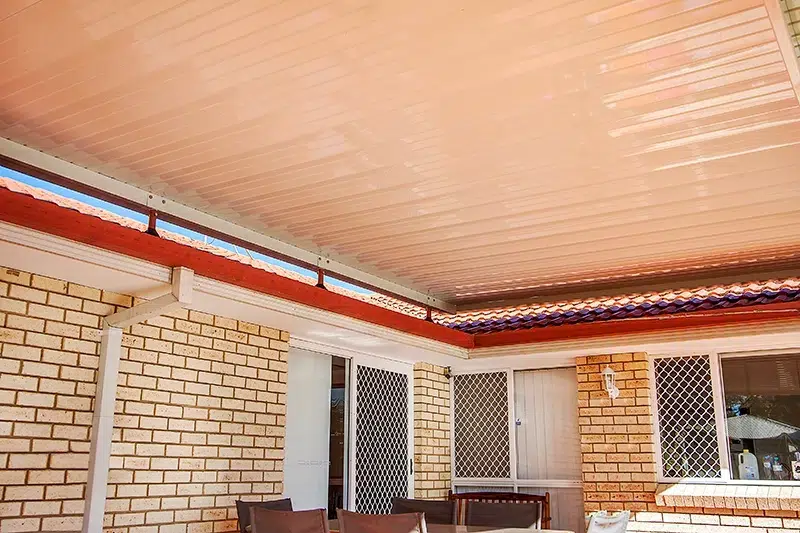
A single layer of pre-finished steel, available in a wide range of colours.
Where it wins in Melbourne
Durability, colour matching and value. Steel handles hail and wind well, doesn’t degrade in UV, and can be matched to your existing roof so the patio reads as part of the house rather than an addition. For carports, walkways and shade structures nobody sits under, it’s the sensible choice.
Where it doesn’t
Radiant heat and noise. Under a single skin on a hot afternoon, the space underneath collects heat from the roof. And rain on steel is loud enough to end a conversation, which is a real limitation somewhere that sees rain in every month.
Polycarbonate and Translucent Inserts
Polycarbonate lets light through while blocking UV. It’s usually a mistake to use it across an entire roof in Melbourne, but it can be a great idea to use somewhere.
Where it wins in Melbourne
As inserts. A section of translucent roofing over a walkway, along the edge of a patio, or above a window that would otherwise be shadowed solves the darkness problem without giving up thermal performance across the rest of the roof
Where it doesn’t
As a full roof. It offers effectively no insulation, transmits noise readily in rain and hail, and creates a greenhouse effect in summer. Cheaper grades also chalk and yellow over time.
Louvre and Opening Roof Systems
Best Patio Roofing Materials for Melbourne's Unpredictable Weather 7
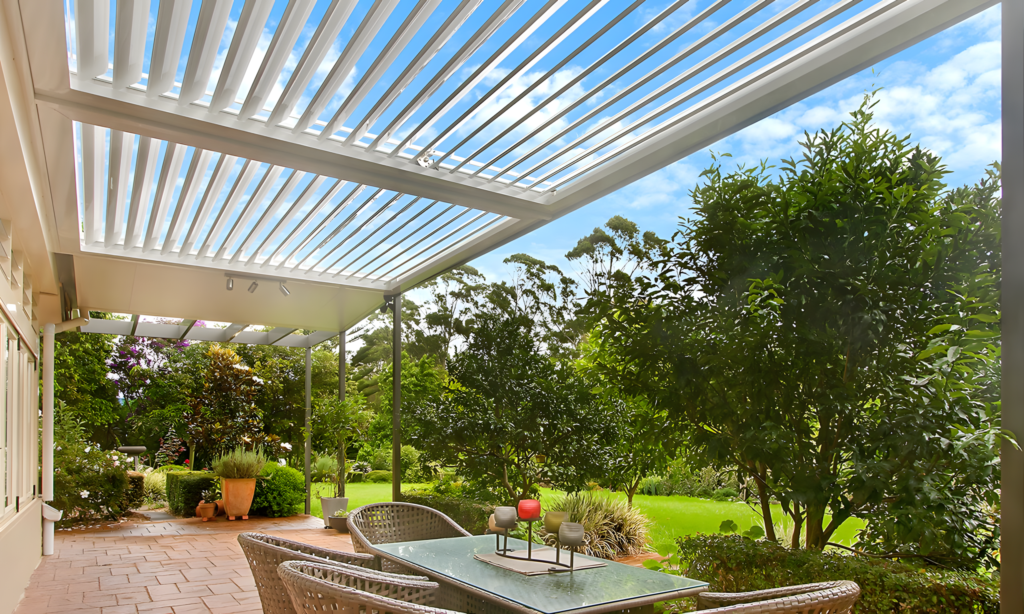
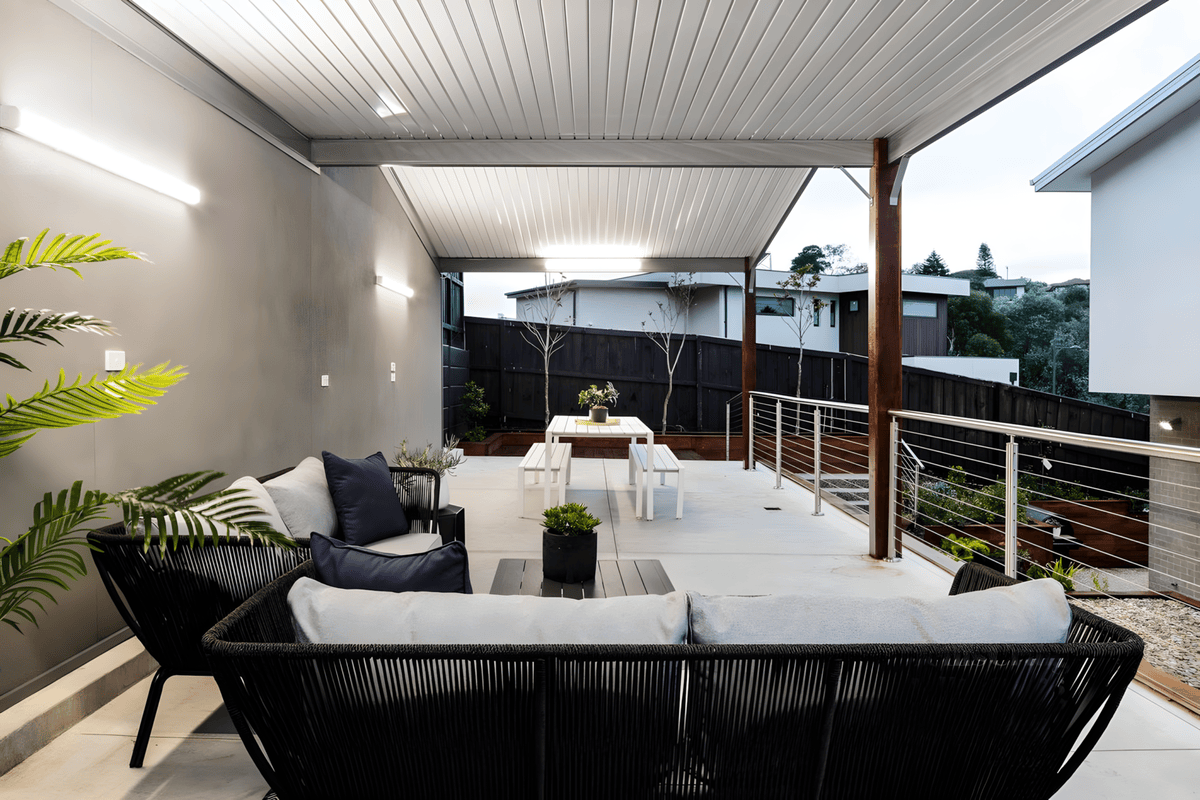
Adjustable aluminium blades that open for sun and close for rain.
Where it wins in Melbourne
Flexibility, which is exactly what an unpredictable climate calls for. Open on a mild October morning, closed when the cool change comes through in the afternoon. If your patio faces west and gets hammered by summer sun but you also want light in winter, this is the material that solves both without compromise.
Where it doesn’t
It’s the premium end of the range, and it’s a mechanical system rather than a static roof.
Timber Battens and Open Pergolas
Best Patio Roofing Materials for Melbourne's Unpredictable Weather 8
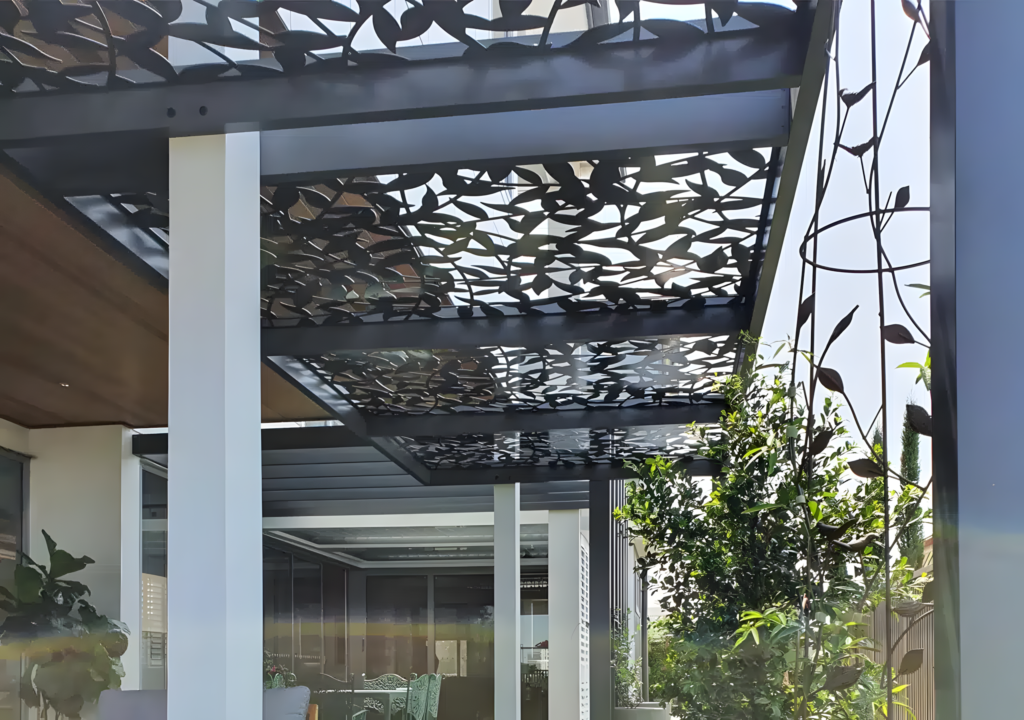
Battens filter light rather than blocking it, and bring warmth and texture that steel can’t.
Where it wins in Melbourne
Appearance, and spaces where dappled light is the point, like over a garden, a walkway, or a courtyard where full cover would feel closed in. On period and character homes, a timber batten pergola often suits the architecture better than anything else.
Where it doesn’t
It isn’t a rain solution, and in Melbourne that limits it to spaces you’re happy to leave to the elements. Timber also needs maintenance that steel and aluminium don’t.
The Material Is Only Half the Answer
Two patios can use identical roofing and perform completely differently.
What separates them is orientation, roof extent, fall and fixings. Insulated panels handle heat from above, but they do nothing about low western sun coming in from the side, which is why a west-facing patio can still be unusable at 5pm regardless of what’s overhead. That can be solved with roof extent, screens or blinds, but it has to be worked out at design stage.
The same goes for water. Every roof needs a deliberate fall, correctly sized guttering, and flashings that tie cleanly into your existing roofline. Get that wrong, and you’ll find out in the first proper winter, whatever the roof is made from.
This is why we treat the roofing material as one of the last decisions rather than the first. Where the sun hits, where the posts can go, how the roofline meets your house and how far we need to span all come first. Once that’s settled, the material usually answers itself.
Approvals Don’t Change With the Material
Whichever roofing you choose, a roofed structure attached to your home in Victoria generally requires a building permit. Some properties need a planning permit as well, depending on overlays that apply to the land.
Trueline manages that process as part of every project, from engineering and drafting through to permit lodgement. You don’t need to organise a separate contractor or deal with council yourself.
Find Out What Suits Your Place
The honest answer to which material is best depends on which way your patio faces, how exposed the site is, and whether you’re building a space to sit in or a structure to park under.
With over 56 years of experience designing outdoor spaces, we’ve designed in plenty of unique and challenging situations, and our team knows the right fit for any home. Book your free in-home design consultation and we’ll come to you.
Common Questions
What’s the best patio roofing material for Melbourne’s climate?
Insulated roofing panels suit most Melbourne homes, because they’re the only common material that manages summer heat and winter warmth while also reducing rain noise. Colorbond steel is a strong value option, and louvre systems offer the most flexibility at a higher cost.
Which patio roof is best for hot afternoon sun?
Insulated panels or a louvre system. Both interrupt radiant heat that a single skin of steel would transmit into the space below. Neither stops low western sun entering from the side, which needs to be handled with roof extent, screens or blinds at design stage.
Does patio roofing material affect rain noise?
Considerably. Rain on single-skin steel or polycarbonate is loud enough to interrupt conversation. Insulated panels absorb much of that noise because of the core between the two sheets. With rainy days reaching close to 17 per month in the peak of winter, it’s worth factoring in.
Will I need to deal with the council directly?
In most cases, no. Building permits are handled through the registered building surveyor, not the council. Where a planning permit is required, council is involved, but we manage this process on your behalf.
For many people, an outdoor area can easily become unusable simply because it’s too much work. The furniture needs to be covered before every storm. The decking needs recoating again.…
By the time most homeowners land on this question, the big decision is already made. You’ve decided you’re building a patio. What’s in front of you now is a quote…
If you’ve started looking into adding a patio to your home, you’ve probably noticed the same thing we hear from homeowners every week: the price ranges online are all over…
With over 50 years' of experience, Trueline has helped thousands of Australian homeowners design custom outdoor spaces they love, from patios and pergolas to carports and verandahs. Built to last. Designed for the way you live.
*Discounts offered on most products and designs and apply to new customers only. Speak to your Trueline Design Consultant or local branch for more details.